
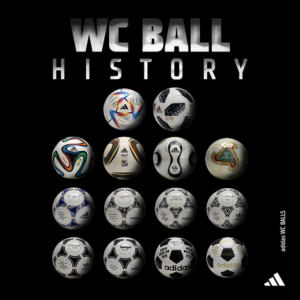
Similar to the game, the FIFA World Cup™ ball has continued to evolve over the years. Beginning in 1930, the balls used in the soccer world’s most famous tournament underwent significant changes, reflecting the new eras of soccer. Let’s take a look at all of the soccer balls used throughout the history of the FIFA World Cup™.
-
1930 Uruguay
T-Model / Tiento

The 1930 FIFA World Cup™ marked the beginning of a new era in history. This ball is considered the most well-known pre-addias FIFA World Cup™ ball of all time. Famously Argentina and Uruguay could not agree on which model to play with for the final, so different models were used for each half.
-
1934 Italy
Federale 102
-
1938 France
Allen
-
1950 Brazil
Duplo T

The Duplo T was the first ball used on the big stage created with a laceless construction. This ball seemed to be a turning point in the construction of the soccer ball used at the FIFA World Cup, as they never went back to laces.
-
1954 Switzerland
Swiss World Champion
-
1958 Sweden
Top Star
-
1962 Chile
Crack
-
1966 England
Slazenger Challenge

-
1970 Mexico
adidas Telstar

In the 1970 FIFA World Cup™, adidas officially entered the scene. Their first official ball for the World Cup, the adidas Telstar is the classic black and white soccer ball we all know. It was specifially designed to be seen more easily on TV. adidas has produced all the official match balls for the FIFA World Cup™ since.
-
1974 Germany
adidas Telstar Durlast

-
1978 Argentina
adidas Tango River Plate

The adidas Tango was adidas’s second new model produced for the FIFA World Cup. The dance, the Tango, inspired the design of the ball. Due to its specific design, the ball created a visually appealing appearance when rotating. The Tango became very popular in the 80s, and the design was applied to all adidas tournament match balls until the 2000 Euro Cup.
-
1982 Spain
adidas Tango Espana

-
1986 Mexico
adidas Azteca

The adidas Azteca was the first FIFA World Cup™ ball to be completely designed to honor the host nation; the name and the pattern on the ball reflect Mexican heritage. This ball was the first official match ball to be made of synthetic materials instead of genuine leather.
-
1990 Italy
adidas Etrusco Unico

-
1994 USA
adidas Questra

-
1998 France
adidas Tricolore

The adidas Tricolore was the first ball designed with color. Its name and design honor France. Tricolore means three colors in French; the three colors used in the ball are the three colors on France’s flag: red, blue, and white. It also features a rooster in the design, France’s national symbol.
-
2002 Korea/Japan
adidas Fevernova

-
2006 Germany
adidas Teamgeist

When creating the adidas Teamgeist, adidas officially transitioned from a 32-panel design to a 14-panel design for the ball. The panels became slightly bigger, which means less seams, and according to adidas, leads to more accurate shots.
-
2010 South Africa
adidas Jabulani

-
2014 Brazil
adidas Brazuca

The adidas Brazuca’s explosion of color helped it become one of the most-sold FIFA World Cup balls ever! The term ‘brazuca’ is an informal term Brazilians use to express national pride and their way of life. The multiple colors used in the ball reflect the vibrancy and excitement in the Brazilian soccer world. The colors used and ribbon design of the six panels represent the wish bracelets worn around the country.
-
2018 Russia
adidas Telstar 18

-
2022 Qatar
adidas Al Rihla

Soon, we will add to this list with the release of the adidas 2026 FIFA World Cup™ ball this Friday! How will the newest FIFA World Cup™ ball match up to some of the most famous soccer balls the world has ever seen?


